
HBAR


$ 0.093227 USD
$ 0.093227 USD
$ 3.3214 billion USD
$ 3.3214b USD
$ 76.461 million USD
$ 76.461m USD
$ 260.1 million USD
$ 260.1m USD
43.8315 billion HBAR
Hedera Hashgraph-related information

Issue Time
2000-01-01

Platform pertained to
--

Current coin price
$0.093227USD

Market Cap
$3.3214bUSD

Volume of Transaction
24h
$76.461mUSD

Circulating supply
43.8315bHBAR

Volume of Transaction
7d
$260.1mUSD

Change
24h
-0.62%

Number of Markets
450
Crypto token price conversion
Current Rate0
0.00USD
HBAR Price Chart
Hedera Hashgraph introduction
 Markets
3H
-0.9%
1D
-0.62%
1W
+17.5%
1M
+17.46%
1Y
-55.53%
All
+184.15%
| Aspect | Information |
| Short Name | HBAR |
| Full Name | Hedera Hashgraph Bar |
| Founded Year | 2018 |
| Main Founders | Dr. Leemon Baird, Mance Harmon |
| Support Exchanges | Binance, OKEx, Huobi, etc. |
| Storage Wallet | Trust Wallet, Ledger, Atomic Wallet, etc. |
Overview of HBAR
HBAR, also known as Hedera Hashgraph Bar, is a type of cryptocurrency that was introduced into the financial market in 2018. The cryptocurrency was founded by individuals namely, Dr. Leemon Baird and Mance Harmon. The cryptocurrency can be exchanged on various platforms including Binance, OKEx, and Huobi among others. In addition, the token can be stored in several types of wallets such as the Trust Wallet, Ledger, and Atomic Wallet.
Pros and Cons
| Pros | Cons |
| Proof-of-stake consensus algorithm | Not decentralized enough |
| Fast transaction throughput | Majority of tokens held by a small group |
| Low transaction fees | Relative infancy in the market |
| Real-world applications | Limited interoperability with other blockchains |
What Makes HBAR Unique?
Hedera Hashgraph (HBAR) introduces several innovations that differentiate it from other cryptocurrencies.
First, HBAR is built upon the Hashgraph consensus algorithm developed by Dr. Leemon Baird. This algorithm uses a protocol known as gossip about gossip to spread information and reach consensus quickly, thus achieving higher throughput and faster transaction times than many blockchain-based cryptocurrencies.
Furthermore, HBAR does not employ a traditional proof-of-work or proof-of-stake consensus model, commonly used in other cryptocurrencies, rather it opts for a Virtual Voting system, a variant of the proof-of-stake model that is reported to require less computational resources.
Another distinction resides in the fact that HBAR operates under a governing council unlike many decentralized cryptocurrencies. This council, made up of large corporations, is responsible for providing stability and direction to the platform. While it moves HBAR away from the full decentralization model, it provides a level of oversight and strategic direction.
How Does HBAR Work?
HBAR, or Hedera Hashgraph Bar, operates on the hashgraph consensus algorithm, which is based on a virtual voting mechanism. This is fundamentally different from the proof-of-work or proof-of-stake mechanisms deployed by many other cryptocurrencies.
This algorithm employs a protocol known as “gossip about gossip” to quickly disseminate information across the network and achieve consensus. In other words, a small piece of information (a two-part 'event' consisting of a transaction and a timestamp) is passed from one node to another in a rapid, cascading fashion. As this information is propagated in the network, each node constructs its own hashgraph to keep track of the information received.
The unique part of the hashgraph protocol is that a node, upon receiving new information, does not only tell the other nodes about this single piece of information. Instead, it also communicates the full history of how it received that information to the other nodes. This allows all nodes to be aware of the information status of the other nodes without needing to directly poll or query them.
The consensus order of transactions is then determined based on this constructed hashgraph. Virtual voting is conducted to decide on the validity and order of transactions. While in classical consensus algorithms each node needs to communicate its vote to all other nodes, in HBAR's case, each node calculates what it thinks the result of the vote will be, based on how it assumes the other nodes would vote. As such, no actual voting occurs, avoiding an extensive overhead of communication.
Once sufficient nodes in the network reach an agreement on the order of transactions, this consensus is recorded on the hashgraph and the transactions are considered validated.
HBAR is also used as a utility token in the Hedera public network, facilitating services such as smart contracts and file storage, in addition to being used for transaction fees and network services.
Exchanges to Buy HBAR
HBAR, or Hedera Hashgraph Bar, is supported by a range of exchanges, and can be purchased using various currency pairs and token pairs.
1. Binance: One of the world's largest and most popular cryptocurrency exchanges. It supports HBAR for trading with pairs such as HBAR/BTC, HBAR/BNB, HBAR/BUSD, HBAR/USDT.
2. OKEx: This is another global cryptocurrency spot and derivatives exchange that supports HBAR. Pairs available include HBAR/BTC, HBAR/USDT.
3. Huobi: A leading digital asset exchange, Huobi allows for trading HBAR against pairs including HBAR/BTC, HBAR/USDT.
4. Bittrex: It is a secure online platform for buying, selling, transferring, and storing digital currency. HBAR can be traded against BTC and USDT.
5. HitBTC: Known for being able to handle high-volume trades, this exchange supports HBAR/BTC and HBAR/USDT pairs.
How to Store HBAR?
HBAR tokens can be stored in several types of wallets that support Hedera Hashgraph (HBAR). Notably, different wallet types provide various features such as convenience, security, control, and anonymity. Here are some of the wallets that you can use:
1. Web Wallets: These wallets run on browsers like Chrome, Firefox, or Safari, and are known for their ease of use. They can be accessed in any location and on various devices but they might lack the security features available in other types of wallets.
2. Desktop Wallets: Download and install these wallets on a PC or laptop. They are safer than web wallets as they only work on the computer they were installed on, delivering enhanced security.
3. Mobile Wallets: Similar to desktop wallets but designed for smartphones. They come with an application to be downloaded. These wallets are useful as they can be used anywhere including retail stores.
4. Hardware Wallets: These wallets are the most secure option for storing cryptocurrency. They store the user's private keys on a hardware device like a USB. They are immune from computer viruses and are quite reliable.
5. Paper Wallets: They are easy to use and provide a very high level of security. The term 'paper wallet' can simply refer to a physical printout of your public and private keys. It could also refer to a piece of software that is used to securely generate a pair of keys which are then printed.
Should You Buy HBAR?
Investing in HBAR or any other cryptocurrency is a decision that should align with an individual's financial goals, risk tolerance, and understanding of the crypto market.
1. Technologically Savvy: Those who have a good understanding of blockchain technology and the underlying principles of cryptocurrencies may be more comfortable investing in HBAR. They could appreciate the Hashgraph technology's differences from traditional blockchain.
2. Risk-tolerant: Like any other cryptocurrency, HBAR is subject to high market volatility. Investors who can tolerate price swings and are willing to take higher risks for potentially high returns might consider investing in HBAR.
3. Long-term Investors: Those who believe in Hedera Hashgraph's technology and long-term vision, and aim to hold their investments for several years, could consider adding HBAR to their portfolio.
4. Diversified Portfolio Holders: Investors looking for diversification in their crypto portfolio may consider HBAR due to its variations in technology from standard blockchain crypto assets.
FAQs
Q: How is HBAR unique when compared to other digital currencies?
A: HBAR's uniqueness lies in its use of the hashgraph consensus algorithm, its deployment of a “gossip about gossip” protocol for quick information spread and consensus, and a Virtual Voting system in place of traditional proof-of-work or proof-of-stake models.
Q: How does HBAR function and operate?
A: HBAR relies on hashgraph consensus algorithm which uses a protocol named “gossip about gossip” for rapid information dissipation, allowing nodes to reach an agreement on the order of transactions, which are then validated on the hashgraph.
Q: Where can HBAR be purchased?
A: HBAR can be purchased on various cryptocurrency exchanges like Binance, OKEx, Huobi, Bittrex, HitBTC, KuCoin, Gate.io, Bitrue, Changelly, and CoinDCX, trading with various currency pairs and token pairs.
Q: Which wallets are suitable for storing HBAR?
A: HBAR can be stored in different kinds of wallets such as web wallets, desktop wallets, mobile wallets, hardware wallets, and paper wallets, with examples being Trust Wallet, Ledger, and Atomic Wallet.
HBAR Good investment market
- 1
- 2
- 3
- 4
- 5
Hedera Hashgraph User Reviews
Hedera Hashgraph News
ExchangeCanary HBAR ETF sees biggest inflow since May as Hedera stays in focus
The Canary $HBAR ETF, trading on Nasdaq under the ticker HBR, pulled in $989,000 in net inflows on J
2026-07-06 06:00
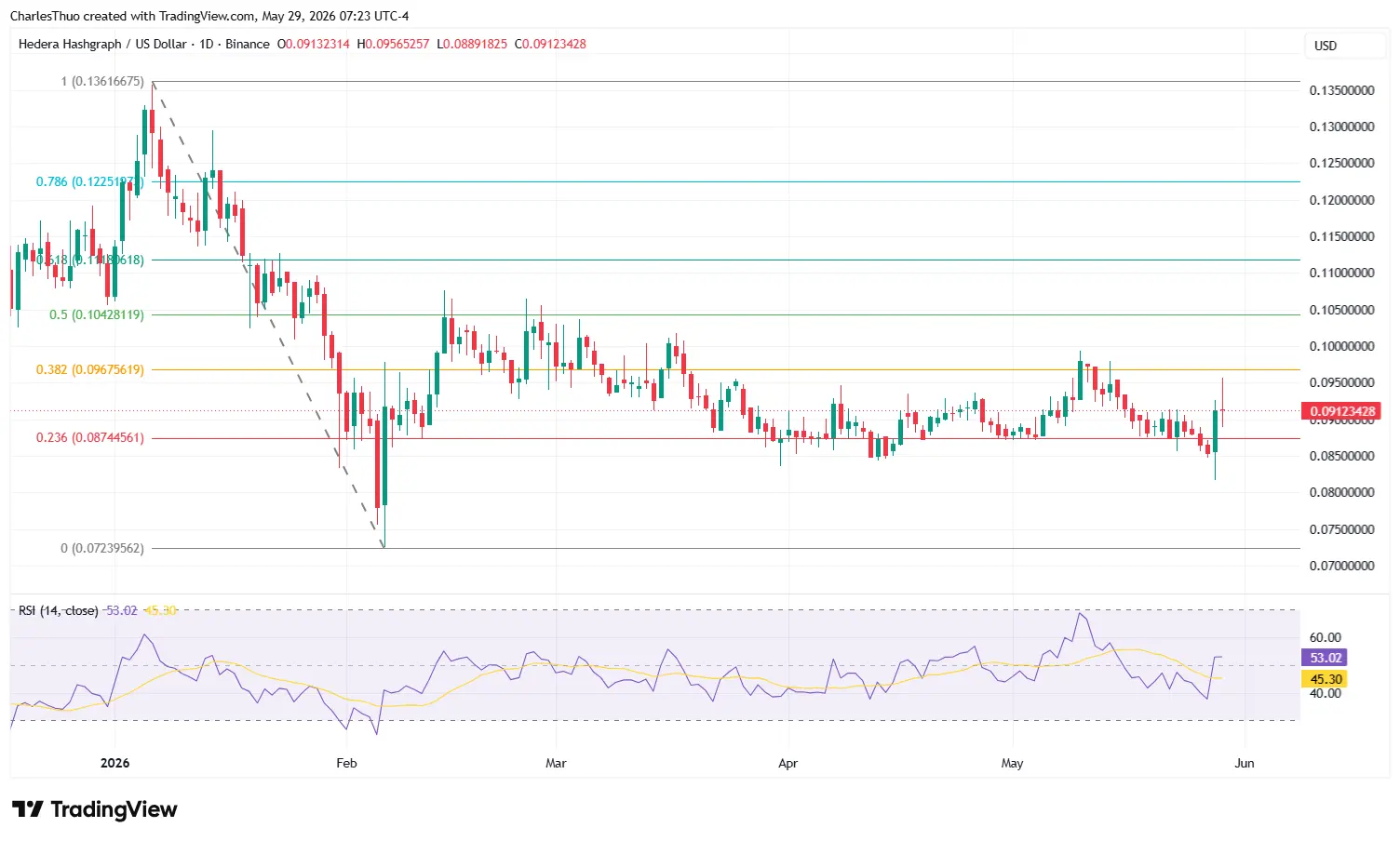
TokenHedera price is up 10% today: Heres why the HBAR price is rising
Hedera coin price has jumped past $0.091 on a 10.5% daily rally with rising volume.Enterprise news a
2026-05-29 21:02
TokenSmart Money Rotation: HBAR Volume Spike Points to a Deeper Move
Hederas native token $HBAR has caught the attention of sophisticated capital in recent sessions. A n
2026-04-20 06:02

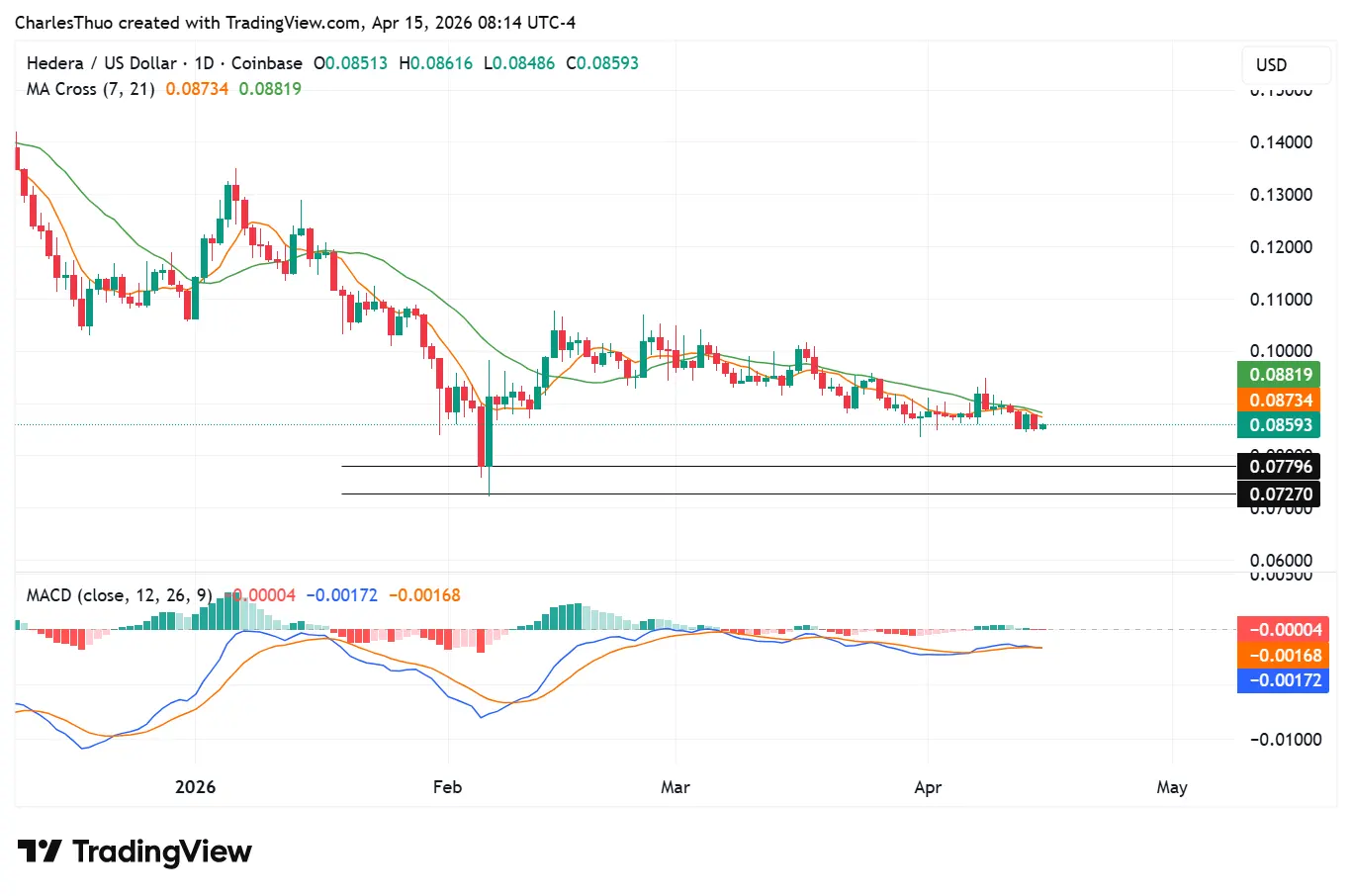
TokenHedera (HBAR) risks dropping to February lows if $0.08 gives way
Hedera ($HBAR) price is hovering near a fragile $0.08 support cluster.Losing $0.08 could open a move
2026-04-16 03:02
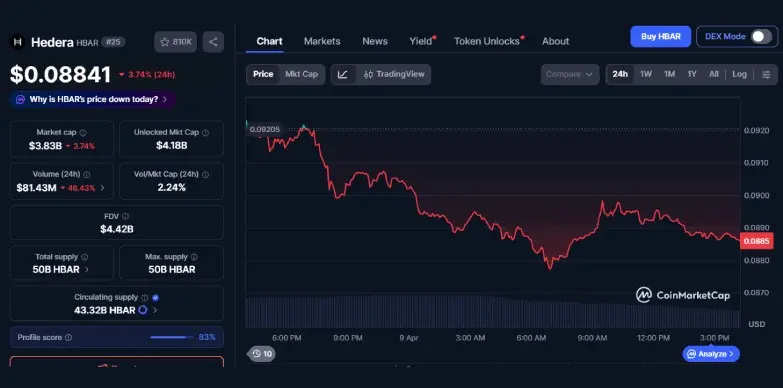
TokenHBAR Price Falls 3.5% Despite ETF Support as Market Sentiment Weakens
Hederas native token $HBAR is sending mixed signals to its investors because, on one hand, there is
2026-04-09 23:03
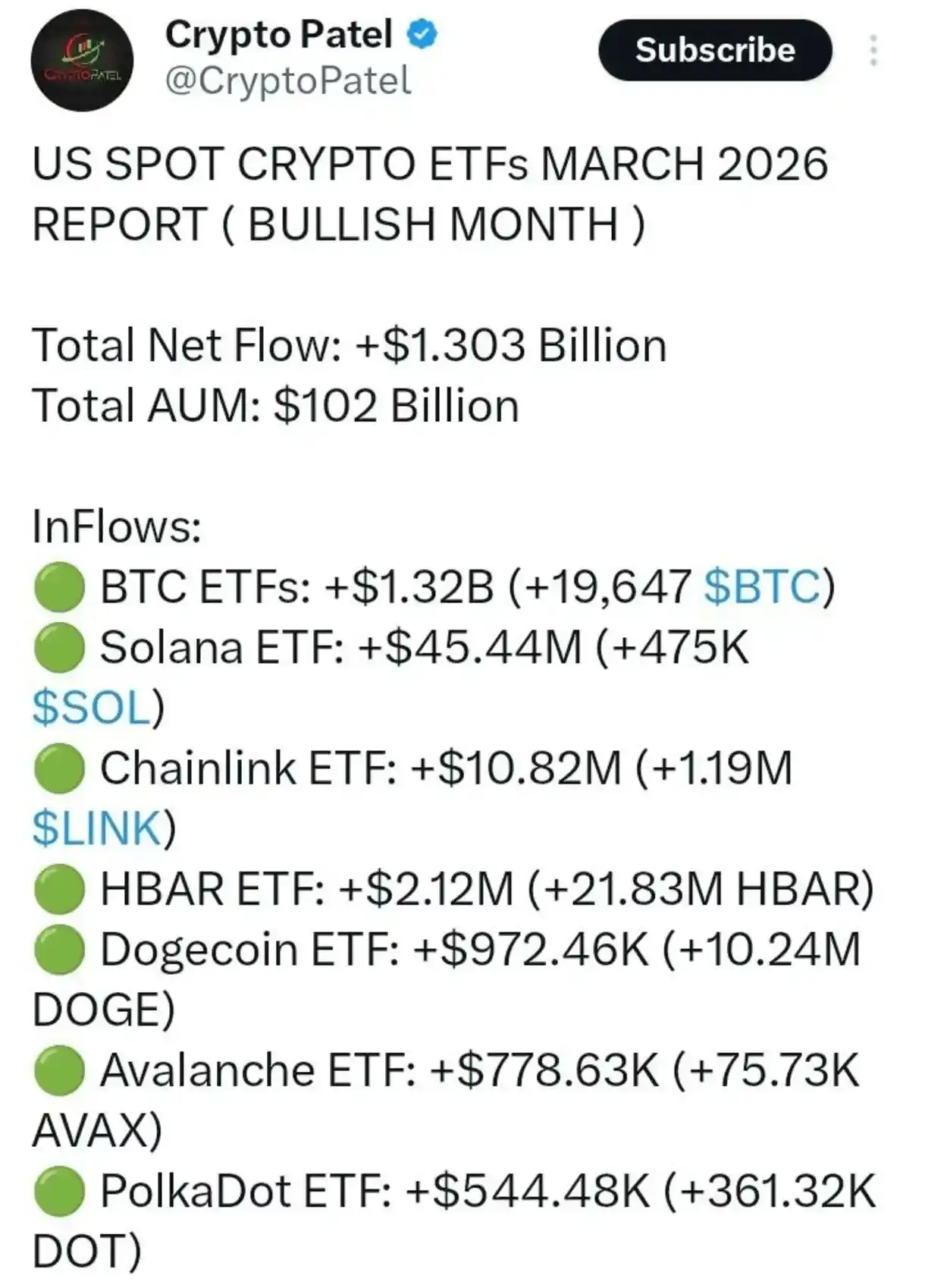
TokenHBAR ETFs Secure a Top 5 Spot in Inflows—Breakout Imminent?
Hederas native token $HBAR is quietly gaining institutional traction. In March 2026, the $HBAR ETF r
2026-04-06 05:03
TokenHBAR price slips to $0.10 as Bitcoin weakness sparks bearish breakdown risk
Hedera dropped to $0.10 as Bitcoin fell to lows of $65,680.Ethereum ($ETH) has shed 5.3% to under $1
2026-02-28 00:02
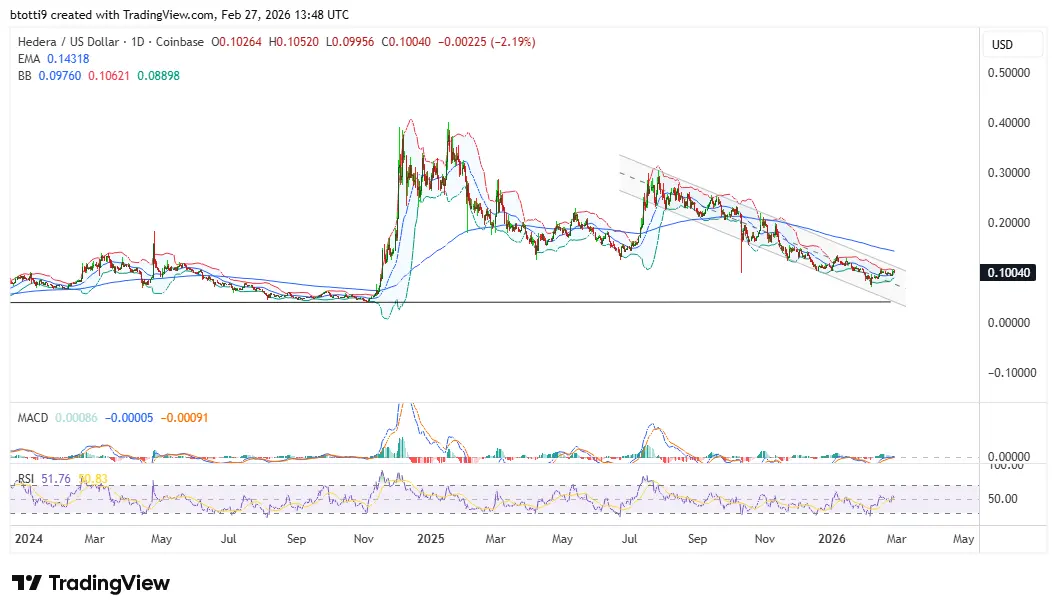
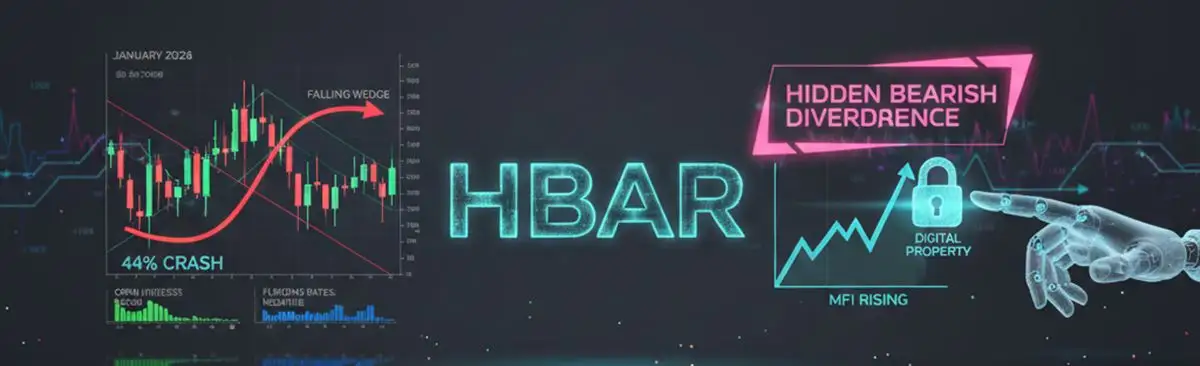
TokenHBAR Flashes a 40% Déjà Vu Signal — But This Time Positioning Tells a Different Story
TL;DR:Hedera presents a “hidden bearish divergence” on its daily chart, a pattern that previously pr
2026-02-20 11:02
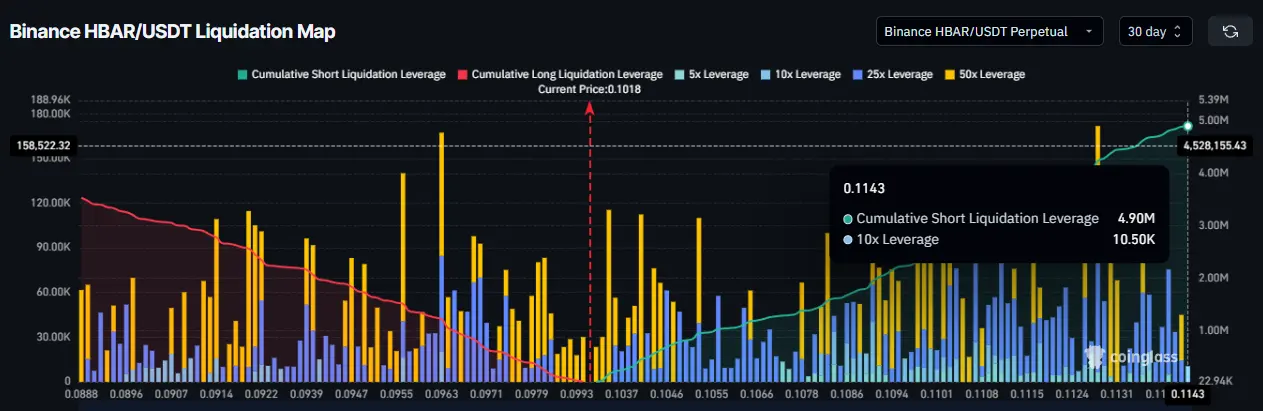
TokenWhy $4.9 Million Liquidations Could Soon Hit HBAR Traders Hard
Hedera has posted a muted recovery in recent sessions. $HBAR price remains constrained by cautious s
2026-02-19 07:02
13 ratings